One of the first questions people ask before starting a new career is completely reasonable: what does it pay? If you’re researching dental assisting in Beaufort, you deserve a direct, data-backed answer — not vague promises or inflated figures.
Here’s what the salary picture actually looks like for dental assistants, what drives the numbers up or down, and how your training choices affect your earning potential.
National dental assistant salary: the baseline
According to the U.S. Bureau of Labor Statistics (BLS), the national median salary for dental assistants is:
- Annual median wage: $45,941
- Hourly median wage: $22.09
The bottom 10% of earners made less than $31,790, while the top 10% earned more than $61,250. That spread reflects real variation — and most of it comes down to experience, location, and specialization.
What drives dental assistant salary up or down
1. Experience
Entry-level dental assistants — those with less than one year on the job — typically start between $32,000 and $40,000 per year. Within a few years of consistent work, most move into the $42,000–$50,000 range. Experienced assistants with specialized skills can exceed $55,000–$60,000 in competitive markets.
2. Location
Geography is one of the biggest factors in dental assistant pay. Offices in high cost-of-living areas — California, the Pacific Northwest, metropolitan areas in the Northeast — often pay significantly more than rural or lower cost-of-living regions. State-level BLS data shows medians ranging from roughly $35,000 to over $55,000 depending on location.
3. Practice type and specialty
Dental assistants working in specialty offices — orthodontics, oral surgery, periodontics — often earn more than those in general dentistry. Specialty practices involve more complex procedures that require more skill and pay accordingly.
4. Certifications and credentials
Dental assistants who earn additional credentials — like Registered Dental Assistant (RDA), Certified Dental Assistant (CDA), or Expanded Functions Dental Assistant (EFDA) — generally command higher pay. Employers pay a premium for assistants who can take on more clinical responsibilities.
5. Office size and patient volume
Larger practices with higher patient volume tend to offer more structured pay scales, benefits, and advancement opportunities than small solo practices.
Entry-level salary: what to expect in your first year
Your first year as a dental assistant is typically the lowest-earning year — but it’s also where skills develop fastest. Most new dental assistants can expect:
- Starting salary: $33,000–$40,000 per year (varies by market)
- Hourly rate: $16–$20 per hour in many areas
- Benefits: Many practices offer health insurance, paid time off, and in some cases dental benefits for employees and family members
After 1–2 years of solid performance, most dental assistants see salary increases toward the national median.
How to increase your earning potential
Earn your RDA or CDA credential
Certification demonstrates clinical competency to employers. In many states, certified or registered dental assistants can perform additional procedures — which makes them more valuable and earns them higher pay.
Develop specialty skills
Adding orthodontic assisting, oral surgery assisting, or expanded functions skills to your resume opens the door to higher-paying positions in specialty offices.
Build a strong track record
Dental offices value reliability, communication, and teamwork. Assistants who consistently show up prepared and work well with the clinical team earn raises and advancement faster than those who don’t.
Consider management roles
Experienced dental assistants sometimes transition into office manager or clinical coordinator roles, which come with higher salaries and broader responsibilities.
Job outlook: is this a field with staying power?
The BLS projects 8% growth in dental assistant jobs through 2033 — faster than the national average for all occupations. Demand is driven by:
- An aging U.S. population requiring more ongoing dental care
- Increased awareness of the connection between oral health and overall health
- Expansion of dental practices and multi-location dental groups
- Dentists delegating more routine tasks to trained assistants to increase office efficiency
Dental assisting is a field with consistent, long-term demand.
Is the training investment worth it?
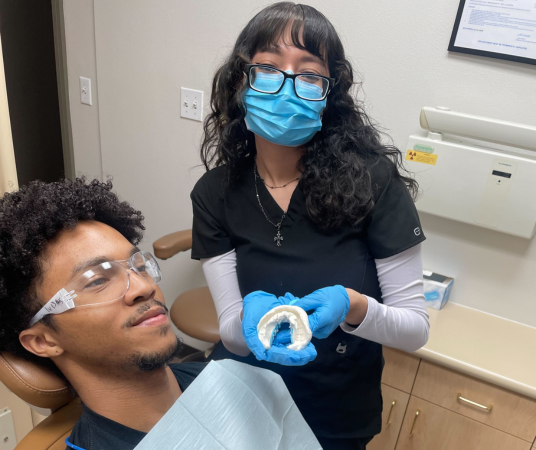
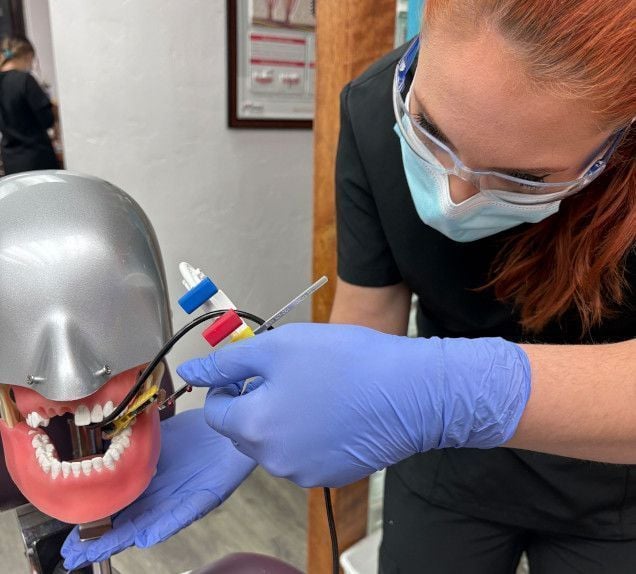
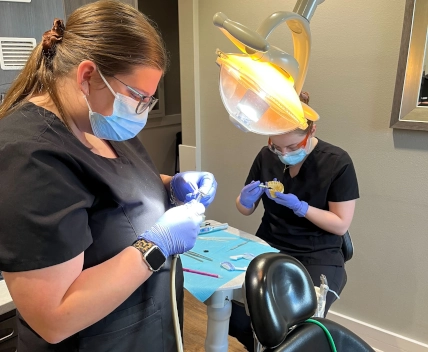
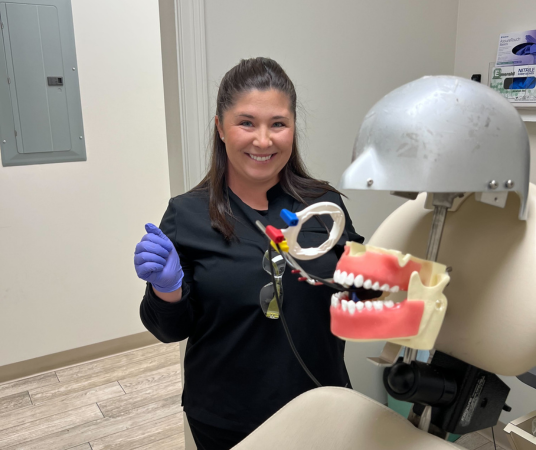
At Beaufort Dental Assistant School, the dental assistant program runs 12 weeks. That means you could go from zero experience to employed in approximately 3–4 months. Compare that to a 2-year community college program — which delays your earning start date by 18 or more months.
Factor in the salary you’d earn during those 18 extra months, and the economic case for a focused shorter program is compelling. You start earning sooner, which adds up significantly over the course of your career.
Get started at Beaufort Dental Assistant School